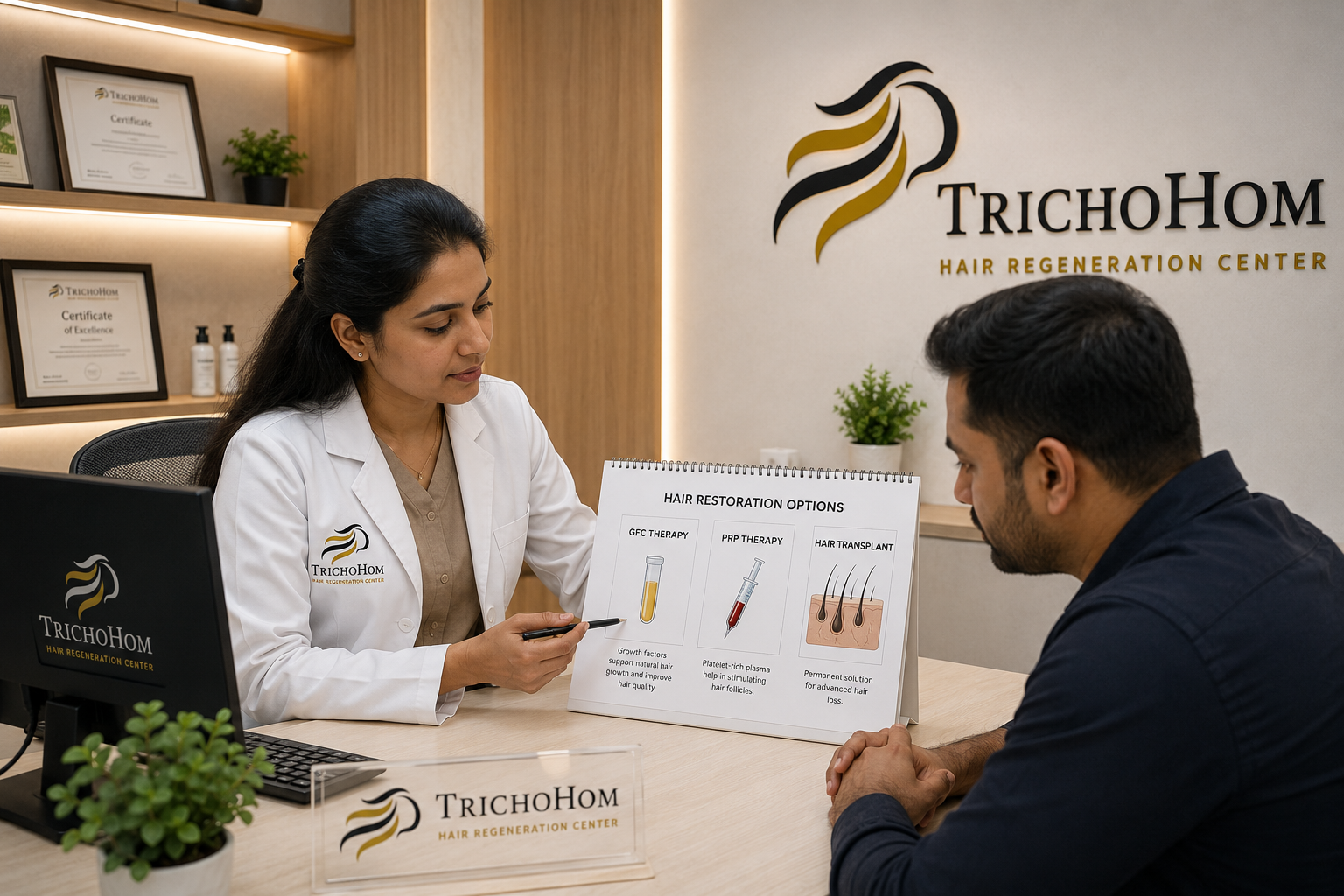
Exosomes vs GFC: What Is the Difference? Hair loss and hair thinning can be frustrating, especially with so many treatment options available today. Two regenerative approaches that are increasingly discussed for hair concerns are GFC (Growth Factor Concentrate) and Exosome Therapy. Although both treatments are associated with regenerative approaches to hair care, GFC and Exosomes …

Exosomes vs GFC: What Is the Difference?
Hair loss and hair thinning can be frustrating, especially with so many
treatment options available today. Two regenerative approaches that are
increasingly discussed for hair concerns are
GFC (Growth Factor Concentrate) and
Exosome Therapy.
Although both treatments are associated with regenerative approaches to
hair care, GFC and Exosomes are not the same. They differ
in their source, biological composition, treatment approach and clinical
evidence.
So, what is the difference between Exosomes vs GFC?
Which treatment may be suitable for hair thinning? And what should you
realistically expect from these treatments?
This guide explains the key differences between GFC and Exosome Therapy
in simple, patient-friendly language.
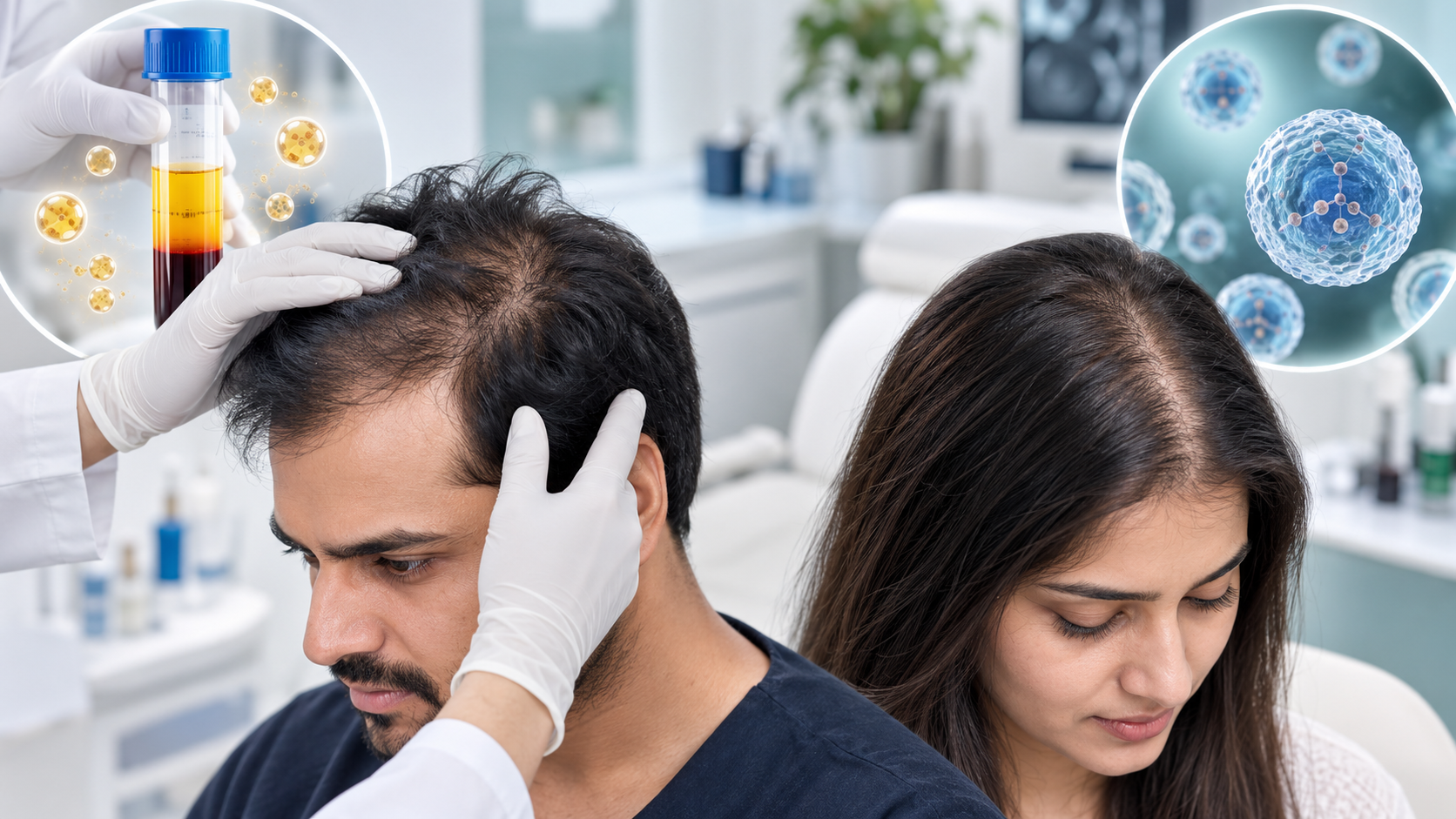
What Is GFC Hair Treatment?
GFC, or Growth Factor Concentrate, is a regenerative
hair treatment that uses concentrated growth factors prepared from the
patient’s own blood.
Growth factors are naturally occurring proteins involved in cellular
communication and tissue-related processes. In hair-focused treatments,
GFC is used with the aim of supporting the scalp environment and existing
hair follicles.
Since GFC is prepared from the patient’s own blood, it is considered an
autologous treatment.

How Does GFC Work for Hair Loss?
A typical GFC procedure begins with collecting a small amount of blood.
The sample is processed to prepare a growth-factor-rich concentrate,
which is then administered into selected areas of the scalp.
- Hair and scalp assessment
- Collection of a small blood sample
- Processing of the sample
- Preparation of the growth-factor concentrate
- Administration into selected scalp areas
- Follow-up based on the individual treatment plan
If you are considering GFC hair treatment, a professional
assessment can help determine whether it is appropriate for your type and
stage of hair loss.
Learn more about
GFC hair treatment.
GFC Treatment Process for Hair Thinning
The GFC treatment process is designed to deliver concentrated growth
factors to selected areas of the scalp. The exact protocol may differ
depending on the clinical system and the patient’s individual condition.
GFC may be considered for selected patients with hair thinning as part of
a broader and personalized hair-loss treatment plan.
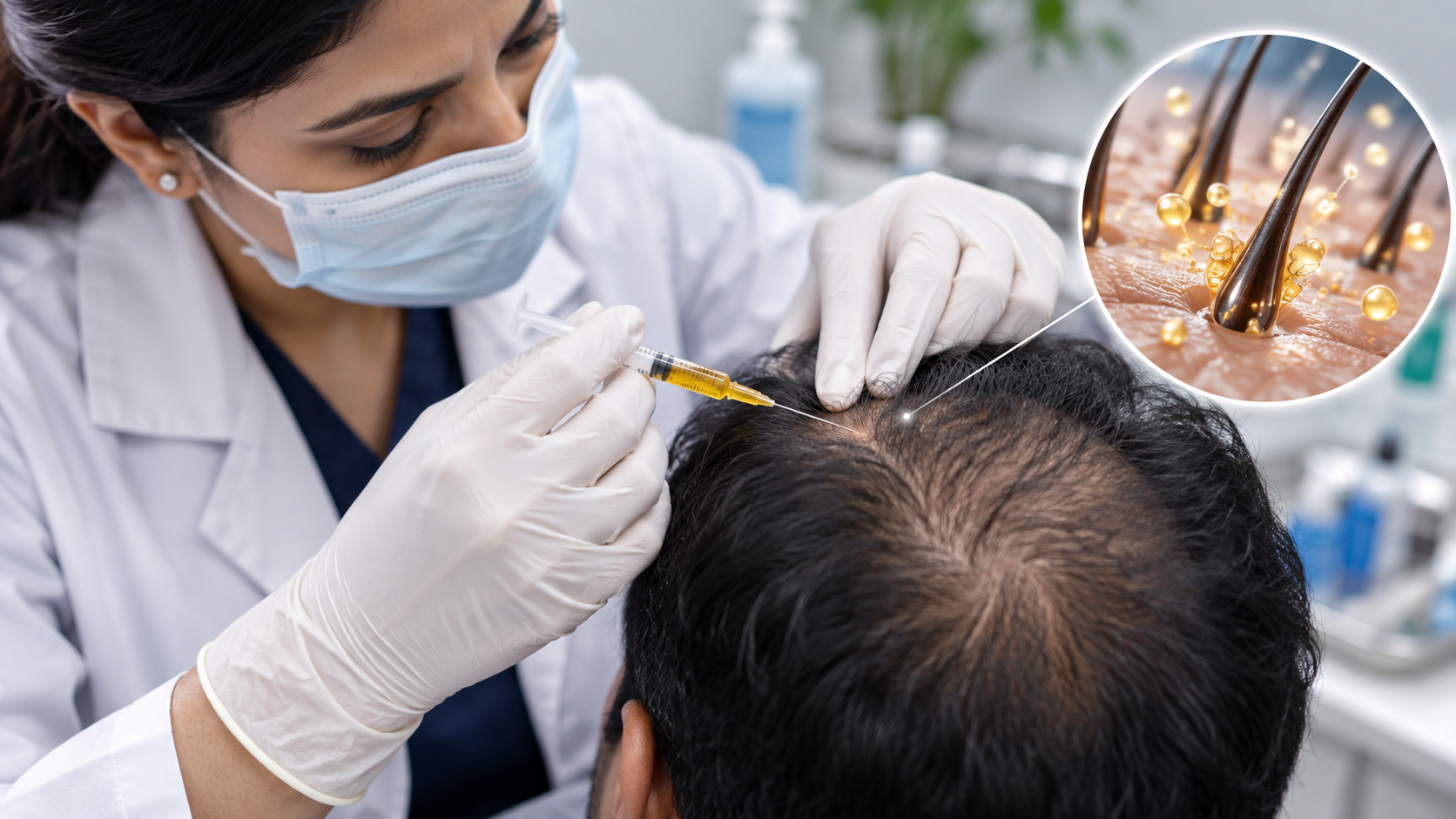
What Is Exosome Therapy for Hair?
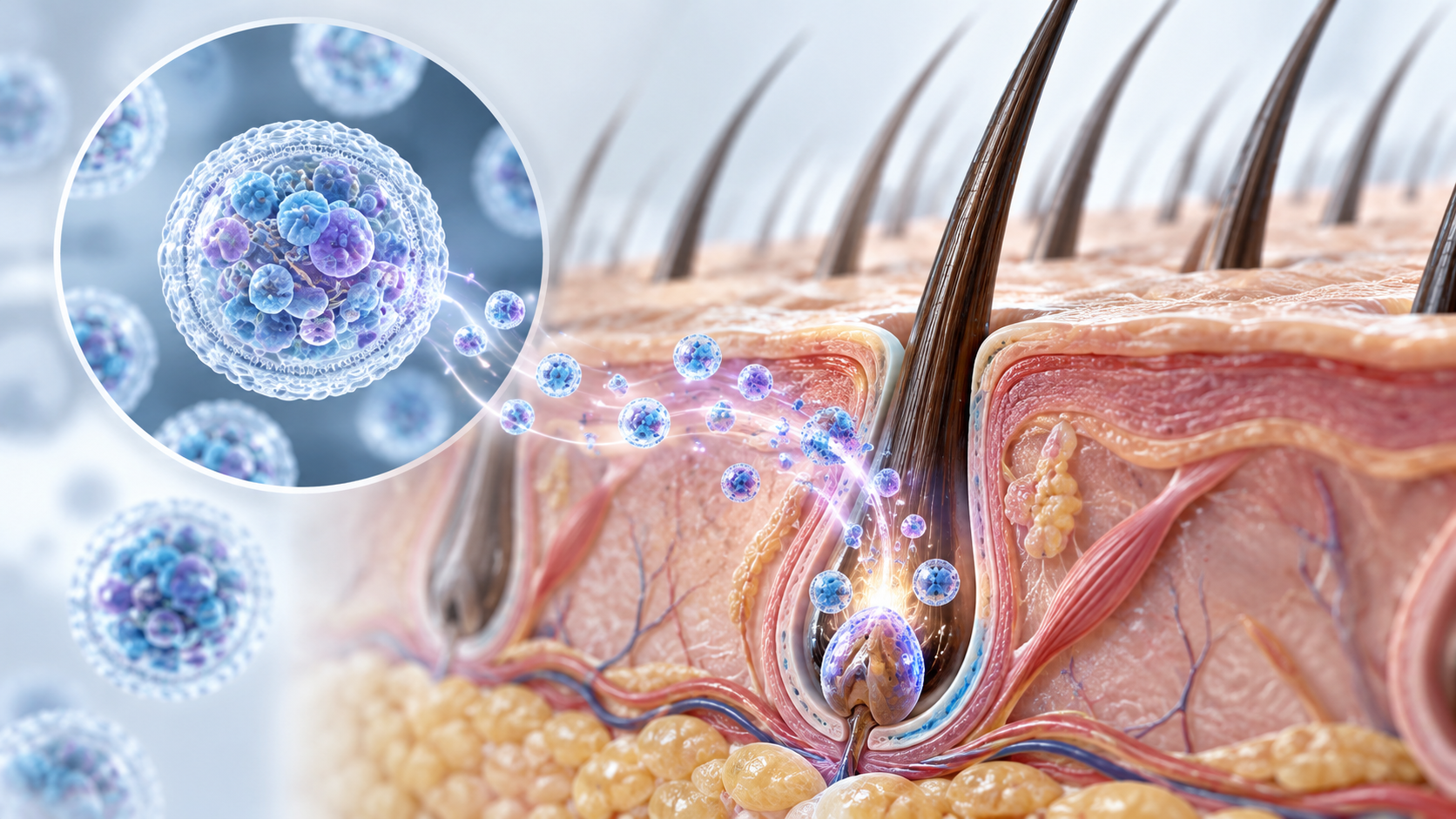
Exosomes are tiny extracellular vesicles involved in
communication between cells. They can carry biological molecules,
including proteins and other signaling components.
Because of their role in cellular communication, exosomes are being
investigated in regenerative medicine, including potential applications
related to hair and scalp health.
In hair-related applications, exosome-based approaches are being studied
for their potential role in supporting the scalp environment and
biological processes associated with hair follicles.
How Does Exosome Therapy Work?
The concept behind exosome therapy is based on the role of extracellular
vesicles in cell-to-cell communication.
In hair-focused applications, exosome-based products are being studied
for their potential interaction with biological pathways associated with
the hair follicle environment.
It is important to understand that not every exosome product is identical.
The source, manufacturing process, composition, quality controls and
available evidence can vary between products.
GFC vs Exosomes: What Is the Difference?
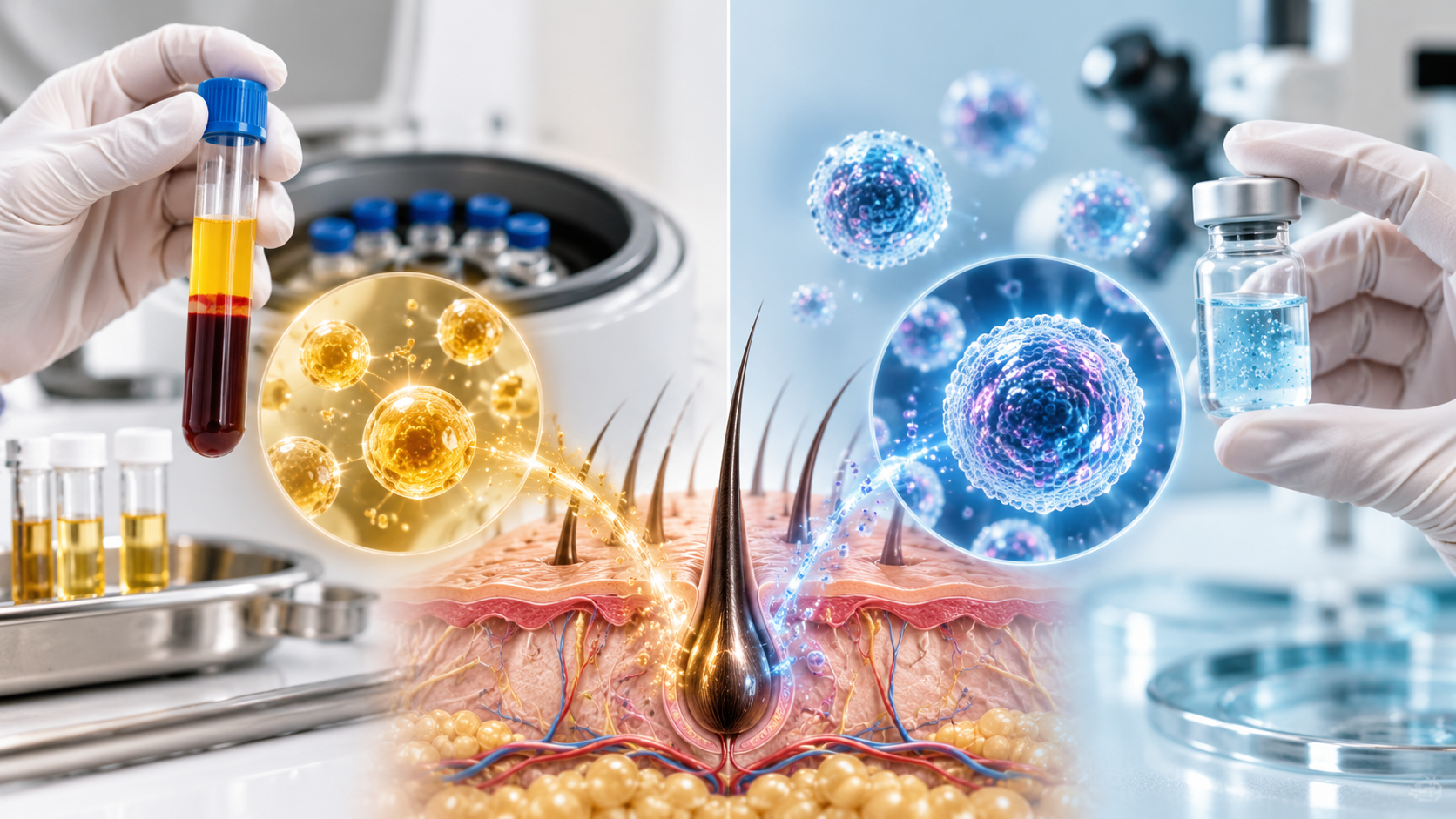
The main difference between GFC and Exosome Therapy is
the biological material being used.
GFC uses a growth-factor concentrate prepared from the patient’s own
blood. Exosome-based approaches use extracellular vesicles involved in
biological communication, with the source depending on the specific
product.
| Feature | GFC | Exosome Therapy |
|---|---|---|
| Basic concept | Concentrated growth factors | Extracellular vesicles |
| Source | Patient’s own blood | Depends on the specific product |
| Autologous | Yes | Generally no |
| Main concept | Delivery of growth factors | Cell-to-cell biological signaling |
| Hair-loss application | Used for selected patients | Emerging area of regenerative hair research |
GFC vs Exosomes: Which Is Better for Hair Loss?
There is no single treatment that is automatically better for every
patient.
Hair loss can have different causes, including male pattern hair loss,
female pattern hair loss, nutritional deficiencies, hormonal factors,
stress-related shedding, scalp conditions and genetic factors.
This is why choosing between GFC vs Exosomes should begin
with a proper hair and scalp assessment.
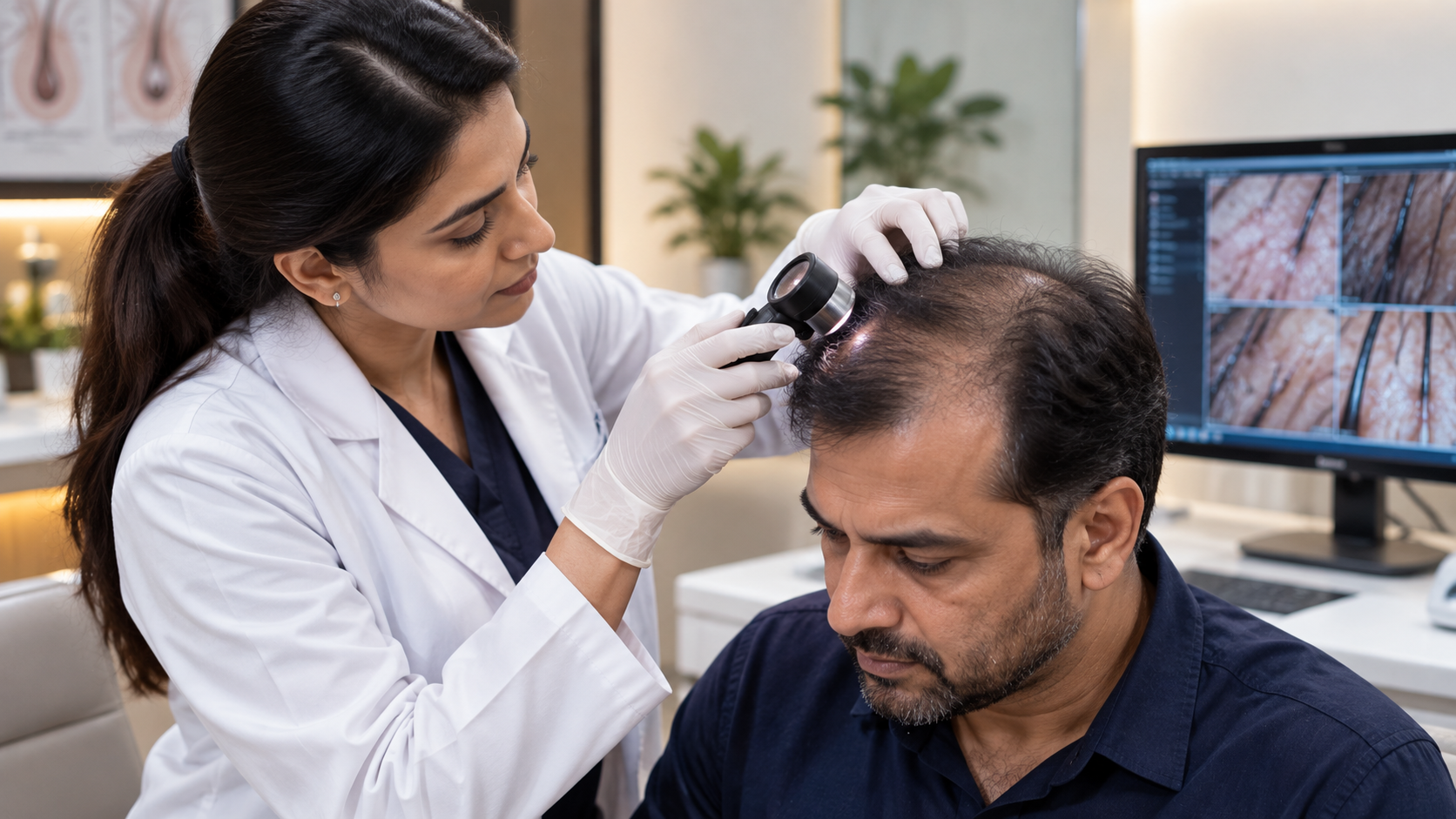
Depending on the diagnosis, a doctor may recommend GFC, Exosome Therapy,
medical treatment, hair transplantation or another suitable approach.
Explore suitable
hair loss treatment options
based on your individual condition.
Can GFC or Exosomes Regrow Hair?
One of the most common questions patients ask is whether GFC or Exosome
Therapy can regrow hair.
The answer depends on the cause and stage of hair loss, the condition of
existing hair follicles and the individual’s response to treatment.
These treatments are generally considered in the context of supporting
existing hair follicles rather than providing a guaranteed cure for
advanced baldness.
Hair growth is a gradual process, so patients should have realistic
expectations and understand that results can vary.
How Many GFC or Exosome Sessions Are Needed?
There is no fixed number of sessions that is suitable for everyone.
Treatment schedules depend on the individual’s diagnosis, degree of hair
thinning, scalp condition, treatment goals and response to therapy.
A personalized treatment plan is generally more appropriate than following
a fixed schedule advertised online.
Is GFC or Exosome Therapy Painful?
Treatments involving scalp injections can cause temporary discomfort,
sensitivity, redness or mild swelling.
The level of discomfort varies from person to person. Your doctor can
explain the procedure and appropriate aftercare before treatment.
Are GFC and Exosome Hair Treatments Safe?
Safety depends on several factors, including the patient’s health,
treatment technique, clinical setting, product quality and medical
supervision.
With GFC, the concentrate is prepared from the patient’s own blood.
For exosome-based treatments, the source, manufacturing standards,
quality controls and intended use of the product are important
considerations.
Patients should discuss the specific product and treatment protocol with
a qualified medical professional before proceeding.

Can GFC and Exosome Therapy Be Combined?
In selected cases, doctors may consider different treatments as part of a
personalized hair-loss treatment plan.
However, combining treatments does not automatically mean better results.
The decision should be based on the patient’s diagnosis, treatment
history, goals, safety considerations and available clinical evidence.
GFC vs Exosomes After Hair Transplant: Are They Useful?
Regenerative treatments may sometimes be considered as part of a
personalized post-transplant care plan.
Whether an additional treatment is appropriate depends on the patient’s
scalp condition, existing hair, transplant status and overall treatment
goals.
If you have undergone or are considering a
hair transplant,
discuss additional treatments with your treating doctor.
GFC vs Exosomes: Which Treatment Should You Choose?
Instead of asking only, “Which is better, GFC or Exosomes?”,
a more useful question is:
“Which treatment is appropriate for my type and stage of hair loss?”
A professional hair and scalp assessment can help identify the pattern
and possible cause of hair loss and determine which treatment options
may be appropriate.
Depending on the diagnosis, treatment options may include medical therapy,
GFC, Exosome Therapy, PRP, hair transplantation or a combination approach.
You can also learn about
PRP hair treatment
as another commonly discussed approach for hair concerns.
Frequently Asked Questions About Exosomes vs GFC
Is GFC the same as Exosome Therapy?
No. GFC and Exosome Therapy are different approaches. GFC uses a
growth-factor concentrate prepared from the patient’s own blood, while
exosome-based treatments use extracellular vesicles involved in
biological communication.
Which is better for hair loss: GFC or Exosomes?
There is no universally better option. Suitability depends on the
individual’s hair-loss diagnosis, scalp condition, follicle health and
treatment goals.
Can GFC help with hair thinning?
GFC may be considered for selected patients with hair thinning. The
potential benefit depends on the underlying cause and condition of the
existing hair follicles.
How soon can I see results after GFC or Exosome Therapy?
Hair growth is gradual, and results can vary between individuals.
Treatment response depends on several factors, including the cause and
stage of hair loss.
How many Exosome Therapy sessions are needed?
There is no universal number of sessions. The recommended protocol
depends on the specific product, treatment approach, patient’s condition
and clinical assessment.
Can Exosome Therapy completely cure baldness?
No hair treatment should be presented as a guaranteed cure for baldness.
Results depend on the cause and extent of hair loss and the condition of
the existing follicles.
Can GFC and Exosome Therapy be used together?
They may be considered together in selected treatment plans, but
combining treatments does not automatically guarantee better results.
The decision should be made by a qualified medical professional.
Which treatment is right for me?
A professional hair and scalp assessment is the best starting point.
Your doctor can identify the likely cause of hair loss and discuss
appropriate treatment options.
Final Takeaway
GFC and Exosome Therapy are not the same treatment.
GFC uses a growth-factor concentrate prepared from the patient’s own
blood, while exosome-based approaches use extracellular vesicles involved
in cell-to-cell communication.
Both are discussed within the broader field of regenerative hair
treatments, but they differ in their source, biological composition,
treatment protocols and clinical evidence.
The right treatment depends on your individual hair-loss pattern, scalp
condition, existing follicle health and treatment goals.

Concerned About Hair Loss or Thinning?
Don’t choose a hair-loss treatment based only on online claims. A
professional hair and scalp assessment can help you understand the
possible cause of your hair loss and explore suitable treatment options.